Bank of England to lift rates to 4%
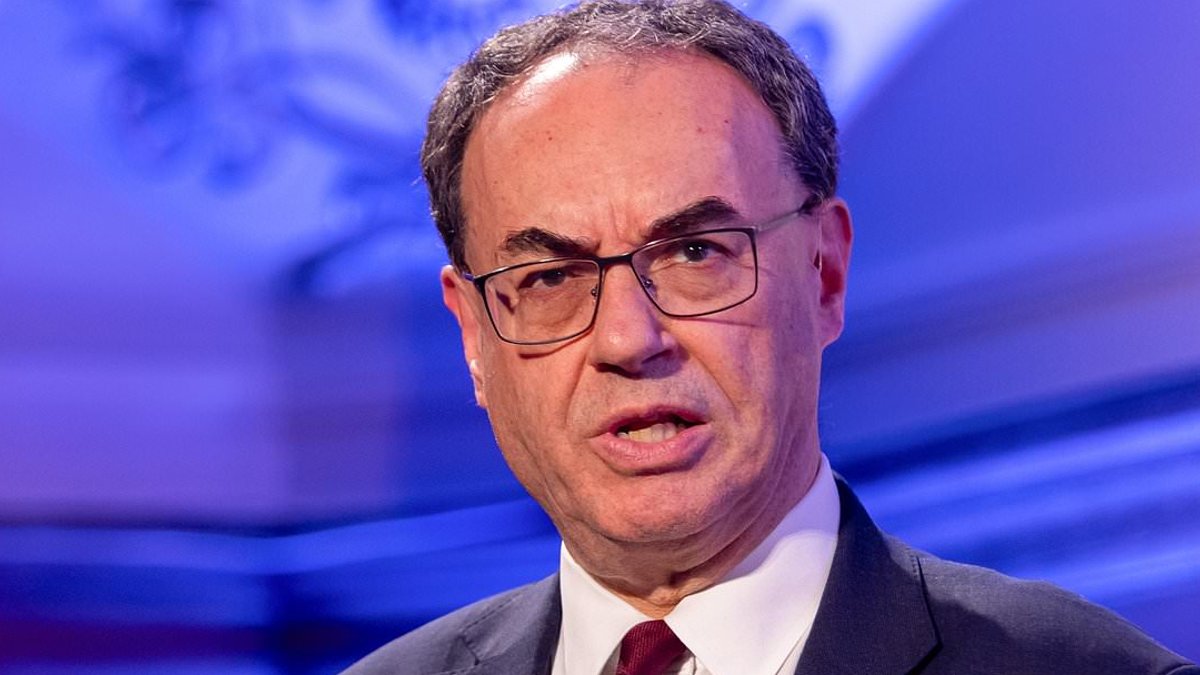
The Bank of England is preparing to lift borrowing costs on Thursday, intensifying financial strain on consumers amid efforts to control climbing inflation. Market analysts and financial experts widely anticipate the move, citing persistent economic strength alongside surging energy prices tied to Middle East tensions. Under Governor Andrew Bailey, the central bank appears set to boost its benchmark rate from 3.75 per cent to 4 per cent, the first adjustment since last August.
Fresh inflation data showing UK Consumer Prices Index (CPI) inflation at 3.5 per cent in September—the highest level in nearly a year—has heightened expectations for action. The central bank faces mounting calls to respond after months of raised price pressures, particularly as energy costs remain volatile.
Rate Increase Likely
Financial markets have already priced in the expected hike, according to Alexander Harvey, economist at Oxford Economics, who stated, “A hike appears a done deal and is fully priced in by financial markets.” With inflation already exceeding the Bank’s 2 per cent target, economists warn of further upward pressure this winter, as Ofgem’s energy price cap is projected to jump by roughly 25 per cent in January 2027.
Danni Hewson, head of financial analysis at AJ Bell, observed that while major central banks like the US Federal Reserve have raised rates, the Bank of England’s Monetary Policy Committee has maintained caution. She noted, “most of the Bank’s Monetary Policy Committee members have clung purposefully to the fence,” adding that the shaky labour market creates both economic concerns and the possibility that weakness could help soften broader inflationary effects.
Economists acknowledge that higher interest rates will not immediately address the current energy-driven price surge, but they concur with traders that a November increase is virtually certain. Paul Dales, chief UK economist at Capital Economics, suggested that if energy prices stabilize next year, any lingering inflationary impact would likely be limited.
Economic Outlook Updates
Thursday’s meeting will also feature revised economic and inflation projections from the Bank. Recent estimates from the Office for Budget Responsibility paint a challenging picture, with inflation forecast to near 4 per cent early in 2027, nearly double the target. Households are bracing for steep rises in essential costs, including food inflation, which is expected to leap from 1.8 per cent in this year’s third quarter to 5.5 per cent in the same period next year.
Despite a 1.8 per cent annual growth spurt in the UK economy during the three months ending August 2026, the fastest expansion since 2022, consumers are struggling with higher living expenses and stagnant wage increases. The OBR forecasts real disposable income per person will grow by just 1 per cent over the decade to 2029-30, a stark contrast to the 10 per cent rise seen in the decade prior.
The Bank’s decision to raise rates will likely increase the burden on mortgage holders, with projections showing housing payments consuming 4.3 per cent of disposable income by 2031, the highest share since 2009.
Savers may benefit as rising base rates typically lift savings account interest, though the latest Budget introduced higher taxes on savings income. Starting April 6, 2027, basic-rate taxpayers will pay 24 per cent, higher-rate taxpayers 44 per cent, and additional-rate taxpayers 49 per cent on savings interest.
Some financial institutions, such as Deutsche Bank and Morgan Stanley, predict an additional rate hike in February, pushing the base rate to 4.25 per cent. However, Huw Pill, the Bank’s chief economist, has cautioned that market expectations may be overstated, suggesting the central bank could avoid multiple rate increases over the coming year. The OBR anticipates the base rate reaching 4.5 per cent by 2030-31, showing the decision’s long-term implications for households and the broader economy.

State pension taxed unlike other benefits


